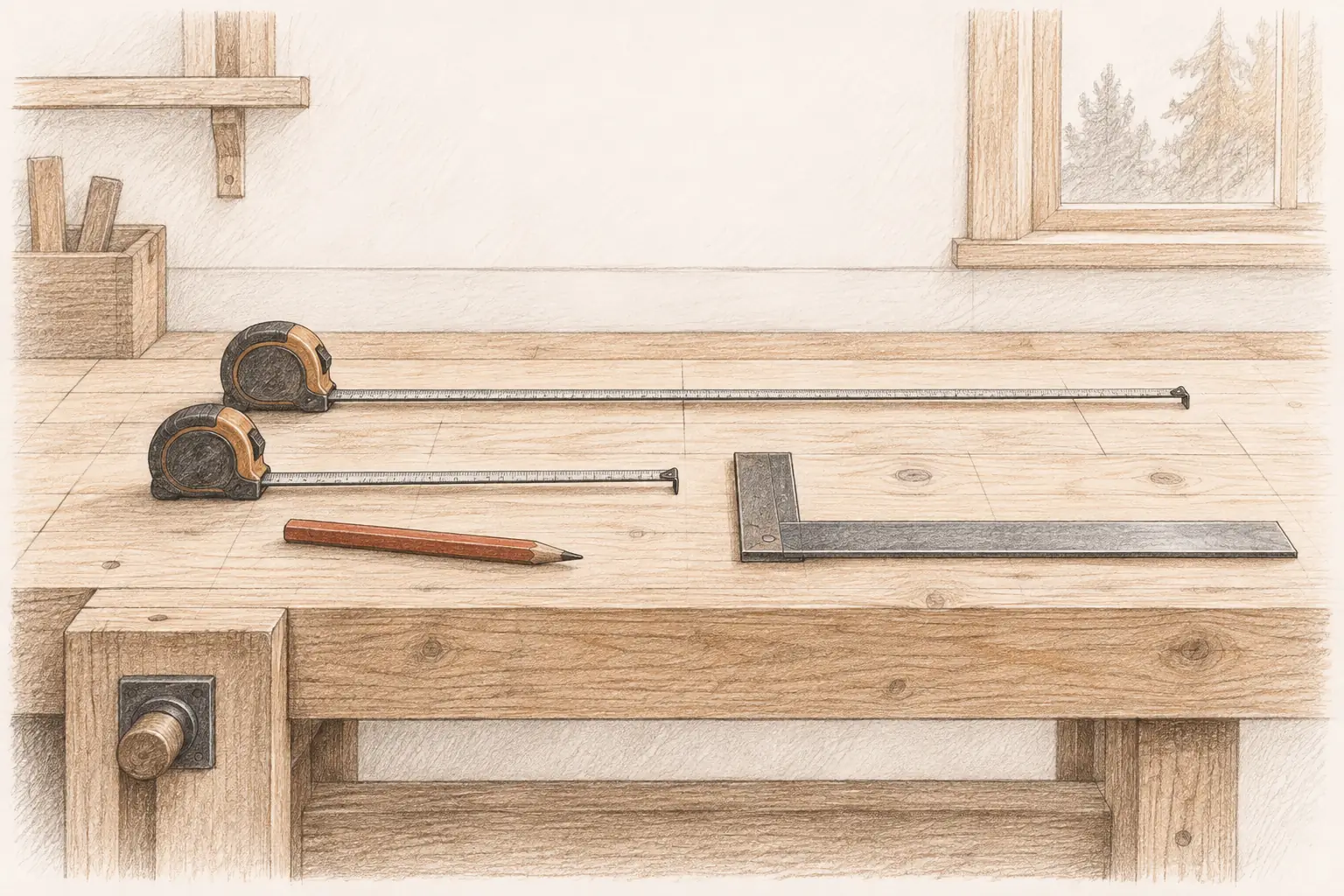
Best Tape Measure for Woodworking (2026): 3 Tapes That Mark Right
Hand tools and mechanics sets
The best tape measure for woodworking is the FastCap ProCarpenter Standard Reverse 16 foot tape, a dual-reading blade with a built-in pencil sharpener, with the 25-foot version for sheet goods and the DEWALT Atomic when you need real standout.
Our picks
The best tape measure for woodworking for most shops is the FastCap ProCarpenter Standard Reverse, and the reason is the blade, not the case. A reverse-reading blade lets you mark from either hand without flipping the tape, which kills one of the most common layout mistakes in a home shop. This pairs with the rest of our hand tool guides, including the mechanics tool set guide if you are building out a tool kit.
What to look for in a woodworking tape measure
The blade is the first thing to judge. A one inch wide blade with high-contrast markings is easy to read to a sixteenth, which is the tolerance most furniture work needs. A narrower blade is lighter, but it will not stand out as far, so it folds on long measurements.
Reading direction matters more than most people expect. A dual-reading or reverse-reading blade lets you pull the tape with either hand and still read the numbers right side up. If you have ever marked from the left edge of a panel and read the tape upside down, you know why this matters.
Then look at what else the tape carries. A belt clip keeps it on you, a pencil sharpener keeps your line thin, and a small notepad catches a measurement you would otherwise lose between the saw and the bench. These details are what separate a layout tool from a measuring tool.
Standout is the last number to check. It is how far the blade reaches before it folds, and it decides whether you can measure a room by yourself. A compact 16 foot tape is fine for casework, and a wide 25 or 30 foot tape is what you want for framing and sheet goods.
Top pick: FastCap ProCarpenter Standard Reverse 16 foot
The FastCap ProCarpenter Standard Reverse 16 foot tape is the best woodworking tape because the blade works the way a woodworker marks. The standard and reverse scales both read right side up, so you can measure with either hand and still trust the number. The one inch blade is high-contrast and easy to read to a sixteenth.
The extras earn their place too. A lever-action belt clip keeps the tape on you, a built-in pencil sharpener keeps your line thin, and the erasable notepad on the case catches a measurement before it disappears. The dual locking system holds the blade where you set it, and the rubber boot takes the drop when it happens.
Plan around one small thing. The compact case shape makes inside measurements that include the case length awkward, so use the hook and read the blade rather than adding the case. That is a habit, not a flaw, and it is the tradeoff for a tape that fits a pocket.
Who it is for: Cabinet, furniture, and trim work, where marking from either hand and reading to a sixteenth is the whole job.
Skip if: You mostly break down sheet goods or frame walls, in which case the 25 foot tape below or a wide framing tape is the better fit.
Shop: FastCap ProCarpenter 16 foot tape on Amazon
Best for long cuts: FastCap ProCarpenter 25 foot
The FastCap ProCarpenter 25 foot tape is the long-reach version of the top pick, built for the jobs where a 16 foot blade runs out. It carries the same reverse-reading blade, high-contrast markings, pencil sharpener, and erasable notepad, in a case sized for longer measurements.
The 25 foot length covers full sheets, long rails, and layout across a room. A four-rivet nose clip and a heavy-duty rubber boot give it the toughness a shop tape needs, and the one inch blade stays easy to read even after a few seasons of use.
This is the tape you buy if you break down plywood regularly. If your work is mostly drawer boxes, small frames, and repairs, the 16 foot version is lighter and quicker to handle.
Who it is for: Shops that break down sheet goods, lay out long runs, or measure across a room.
Skip if: Your projects rarely exceed a few feet, where the smaller 16 foot tape is easier to live with.
Shop: FastCap ProCarpenter 25 foot tape on Amazon
How the woodworking tapes compare
The FastCap tapes are the layout tools for furniture and cabinet work, and the DEWALT is the tape for framing and long solo measurements. The DEWALT Atomic carries a 13 foot reach and an integrated finger brake that stops the blade where you want it, plus a double-sided print for reading overhead. Keep one FastCap on the bench, and add the DEWALT if your work extends to walls and decks.
How to read a tape measure without making a bad cut
Decide where the hook goes before you mark. The hook moves slightly on purpose, so the inside of the hook is the true zero. When you measure between two points, read from the inside edge of the hook, not the tip, or every cut comes out a hook length short.
Say the number out loud and mark it once. A sharp pencil line is the standard for woodworking, and a dull pencil can turn a sixteenth into a moving target. Read the measurement, say it, then mark it with a single line you can set the saw on.
Measure twice from different directions. On a critical cut, measure from the left edge, then from the right edge, and check that the two add up to the total. A tape that reads the same both ways tells you the blade is right, and a mismatch tells you where the error is before you cut.
Check the blade against a known length. Once a month, hook the tape on a framing square or a known 12 inch mark and see that the number lines up. A bent hook or a stretched blade causes small errors that add up over a project, and this check catches both in a few seconds.
Who should skip these tapes
Skip the 16 foot FastCap if you work almost entirely with sheet goods. You will spend more time walking the tape across a full sheet than you save with the lighter case, and the 25 foot version does that job better.
Skip both FastCap tapes if you frame walls or build decks. You want a wide blade and long standout for solo measurements, which is what the DEWALT Atomic or a dedicated framing tape gives you. Using a cabinet tape on framing is how you end up measuring the same board three times.
Skip the DEWALT Atomic if your work is fine furniture. The compact grip helps on site, but the 30 foot blade and the case that goes with it are more weight than a bench tape needs.
Bottom line: The best tape measure for woodworking is the FastCap ProCarpenter Standard Reverse 16 foot tape for dual-reading accuracy on the bench, with the 25 foot version for sheet goods and the DEWALT Atomic for standout and framing. More shop guides live on the Workshoppicks blog and the hand tool guides page. If you are still building the kit around it, our mechanics tool set guide covers the sockets and wrenches side.
Frequently Asked Questions
What is the best tape measure for woodworking?
The best tape measure for woodworking is the FastCap ProCarpenter Standard Reverse 16 foot tape. The dual-reading blade lets you mark from either hand, the high-contrast one inch blade is easy to read to a sixteenth, and the built-in pencil sharpener and erasable notepad keep your marking gear together.
What does reverse reading on a tape measure mean?
A reverse-reading blade has numbers printed so you can read them whether you pull the tape with your left or right hand. On a standard tape, one direction reads upside down, which is how people misread a measurement by an inch. A dual-reading blade removes that error, which matters when you mark from both edges of a panel.
Should I buy a 16 foot or 25 foot tape measure?
Buy a 16 foot tape for cabinet and furniture work and a 25 foot tape if you break down sheet goods. The 16 foot tape is lighter and easier to control, which makes it the one you reach for most. The 25 foot tape covers full sheets and long rails where a 16 footer runs out of blade.
Why do woodworkers like a tape with a pencil sharpener?
Because the pencil is the part you lose. A tape with a built-in sharpener keeps a point on the pencil you are already carrying, so your line stays thin and accurate. A dull pencil is the quiet cause of a joint that fits on one end and gaps on the other.
How do I stop misreading a tape measure?
Add the hook, not the number. When you measure between two points, remember that the hook is part of the length, so the mark you read is the distance from the inside of the hook. Say the measurement out loud, mark it with a sharp pencil, and check it against the plan before you cut.
What is tape standout and does it matter?
Standout is how far the blade extends before it folds over. A 16 foot tape might stand out 7 to 9 feet, and a compact 30 footer can reach 13 feet, which lets you measure across a room alone. Standout matters most on long measurements and on wide blades, since a wider blade holds straight longer.
Are these tapes good for framing?
The 25 foot FastCap works for light framing and layout, and the DEWALT Atomic is the better choice for full framing because of its standout and its 13 foot reach. For cabinet and furniture work, the 16 foot tape is the better tool, since the case is smaller and the blade is easier to control.
Do I need more than one tape measure?
Yes, eventually. Keep one tape on the bench and one in the tool belt so you are never hunting for it mid-cut. Two tapes also let you verify an important measurement with a second blade, which catches a misread before it turns into a short rail.