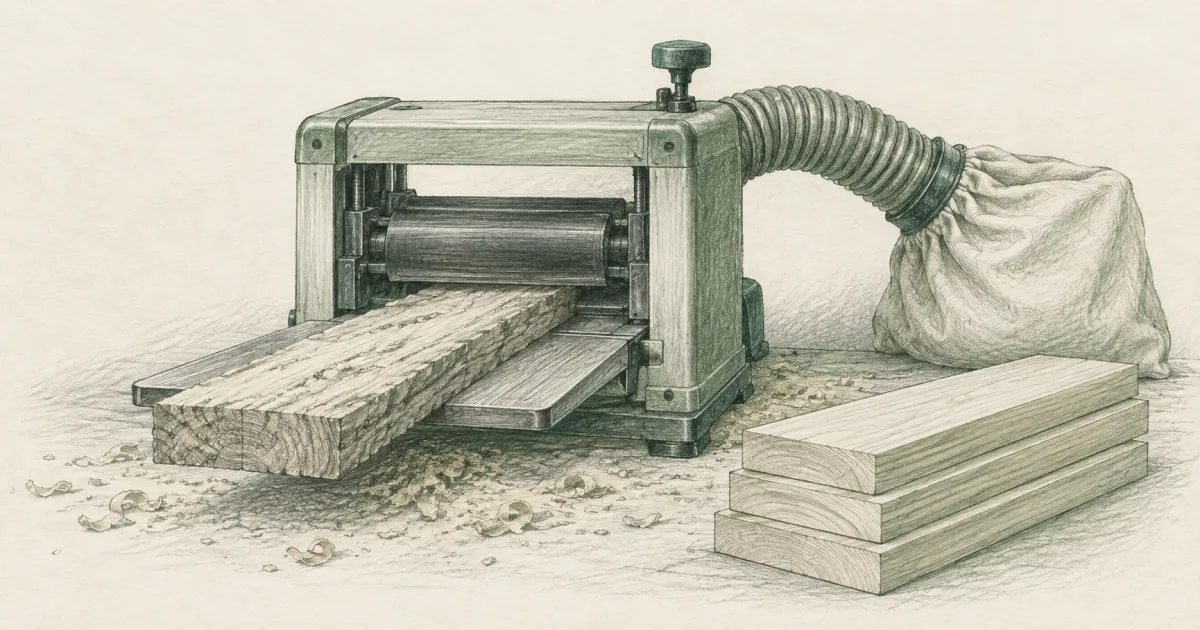
Best Benchtop Planer (2026): Two Picks for Flat, Even Boards
Woodworking tools
The best benchtop planer for most small shops is the DEWALT DW735X, a 13-inch three-knife machine with a two-speed gearbox and a chip blower. Choose the WEN PL1326 if you want a spiral cutterhead and a lower price.
Our picks
The best benchtop planer for most shops is the DEWALT DW735X. It sizes rough boards to a consistent thickness, leaves a finish that needs little sanding, and blows its own chips into a barrel. If you are still squaring edges before you plane, our router guide covers the tool that does that, and the rest of our woodworking tool guides cover sanders, saws, and shop setup.
What a benchtop planer does that a sander cannot
A planer makes a board even thickness. A sander smooths a surface, but it follows every dip and crown in the wood, so it cannot fix a board that is thicker on one end. If you buy rough lumber, or you resaw boards on a bandsaw, the planer is the tool that turns them into parts.
A planer is also what makes a project come together. When every rail is the same thickness, joints close and glue-ups stay flat. That is why a planer usually comes before a drum sander in a small shop, not after.
The spec that matters is the cutterhead. Straight knives are cheap and leave a decent surface, but they tear out figured wood and need care to reset. A spiral or helical head uses small indexed cutters that shear the wood, which leaves a cleaner face on grain that changes direction.
Top pick: DEWALT DW735X
The DEWALT DW735X is the best benchtop planer for most shops because it handles the whole job. The 15-amp motor turns the cutterhead at 10,000 RPM, and the three-knife head delivers a long knife life between changes.
The two-speed gearbox is the feature that separates it from the cheaper machines. Run the fast setting to dimension rough stock, then switch to the slower feed for 179 cuts per inch on the finishing pass. That is how you get a face that is ready for a light sanding instead of a lot of scraping.
The fan-assisted chip ejection is the other win. It blows chips out of the cutterhead and down the exhaust port, so a short hose into a barrel keeps the bench clear. The X kit also includes infeed and outfeed tables and a spare set of knives.
Know the tradeoffs. The stock knives chip and dull faster than the rest of the machine, and replacement sets are not cheap. The machine is also heavy, and the blower makes it loud. Neither matters much if it lives on a stand in the corner.
Who it is for: Furniture builders and serious hobbyists who plane rough or resawn hardwood often and want a finish-ready surface.
Skip if: You only plane a board now and then, or you cannot give up the floor space and the noise.
Shop: DEWALT DW735X on Amazon
Best spiral cutterhead: WEN PL1326
The WEN PL1326 is the best value if you want a spiral cutterhead without the DEWALT price. The 15-amp motor turns the cutterhead at 10,000 RPM with a 26-foot-per-minute feed, and it planes boards up to 13 inches wide and 6 inches thick.
The spiral head is the reason to buy it. The 26 staggered blades shear the wood instead of slicing straight across the grain, so figured maple and other reversing grain tear out less. Each blade indexes on four sides, so when one edge dulls you rotate it instead of buying a new set.
The cast-iron base keeps the machine from walking during a pass, and the infeed and outfeed tables fold for storage. The onboard material removal gauge tells you how much you are taking off per pass, which helps you avoid over-cutting.
Plan for a little tuning. The factory table setting leaves noticeable snipe until you level the tables, and the machine ships with oil and grease that transfers to the first boards. Run a scrap piece through a few times before you feed good stock.
Who it is for: Beginners and small shops that want a spiral head, a cast-iron base, and a lower price than the DEWALT.
Skip if: You plane hardwood in volume and want the quietest, smoothest finishing pass the category offers.
Shop: WEN PL1326 on Amazon
How the two planers compare
The choice comes down to finish and money. The DEWALT gives you two feed speeds and a blower that clears chips, and it holds up to regular use. The WEN gives you a spiral head for less, but you level the tables and manage chips yourself.
Snipe, knives, and feed speed
Snipe is the dip at the ends of a board that happens when only one roller holds the stock. Both of these planers can produce it. Level the infeed and outfeed tables with the bed, take lighter passes, and run a longer board so you can trim the ends. Roller stands help on long stock.
Knives decide your long-term cost. The DEWALT uses three straight knives that chip and dull, and a replacement set runs about $80. The WEN uses indexed spiral blades you rotate, which spreads the cost out, though it is a spiral head rather than a true helical head, so the finish is not identical.
Feed speed decides the surface. A slow feed gives more cuts per inch and a smoother face. The DEWALT lets you choose, and the WEN runs one speed. On figured wood, take lighter passes on either machine instead of forcing a deep cut.
Who should skip a benchtop planer
Skip both if your real need is flattening one face. A planer copies the face it is handed, so a cupped or twisted board comes out cupped and thinner. Flatten the first face on a jointer, or with a planer sled and shims, then use the planer to size the second face.
Skip both if you run wide slabs or production volume. A 13-inch benchtop planer tops out at 13 inches wide, and the motors are not built for all-day use. A floor-standing planer with a bigger motor and a wider bed is the tool for that work.
Skip the WEN if noise and chips bother you. It needs a hose to a collector or a shop vac, and it is not quiet. The DEWALT's blower and heavier base make it the more comfortable machine if you plane often.
Bottom line: The best benchtop planer is the DEWALT DW735X for its three-knife finish and chip blower, or the WEN PL1326 if you want a spiral cutterhead for less. More shop guides live on the Workshoppicks blog and the woodworking tool guides page. If edges and profiles are next on the list, read our router guide.
Frequently Asked Questions
What is the best benchtop planer for the money?
The best benchtop planer for the money is the DEWALT DW735X if you want the smoothest finish and the longest life. The WEN PL1326 is the better value on a tighter budget, because it gives you a spiral cutterhead for less than the DEWALT.
What is the best benchtop planer for beginners?
For a beginner, the WEN PL1326 is a friendly first planer. The spiral head is more forgiving on figured wood, the controls are simple, and the price leaves room for a dust hose and a spare blade set. The DEWALT is the upgrade when you plane often.
What is the difference between a spiral and a helical cutterhead?
A spiral cutterhead holds rows of small blades parallel to the cutterhead axis. A helical cutterhead angles those rows around the head. Both leave a smoother surface with less tear-out than straight knives, and both let you rotate a damaged cutter instead of resharpening it.
Is the DEWALT DW735X worth the extra money?
Yes, if you plane hardwood often. The three-knife head and two-speed gearbox give a finishing pass at 179 cuts per inch, and the built-in blower clears chips without a separate collector. The main knock is the stock knives, which dull faster than owners expect.
How do I stop snipe on a benchtop planer?
Set the infeed and outfeed tables level with the bed, take lighter passes, and feed a long board so you can trim the ends. Snipe happens when only one roller holds the board, so the nose and tail dip into the cutterhead. Support long stock with roller stands too.
Do I need a dust collector for a benchtop planer?
You need somewhere for the chips to go. The DW735X has a blower that pushes chips into a hose and barrel, so a 5-micron bag on the exhaust works. The WEN needs a hose to a dust collector or shop vac, because it does not blow chips on its own.
What size planer is best for a small shop?
A 13-inch benchtop planer is the best fit for most small shops. It handles boards up to 13 inches wide and 6 inches thick, which covers furniture and trim work. Wider stock means a floor-standing machine and more space.
Can a benchtop planer flatten a cupped board?
No, a planer makes a board thinner, not flat. It follows the existing face, so a cupped board comes out cupped and thinner. You need a jointer, or a planer sled with shims, to flatten the first face before the planer sizes the second.