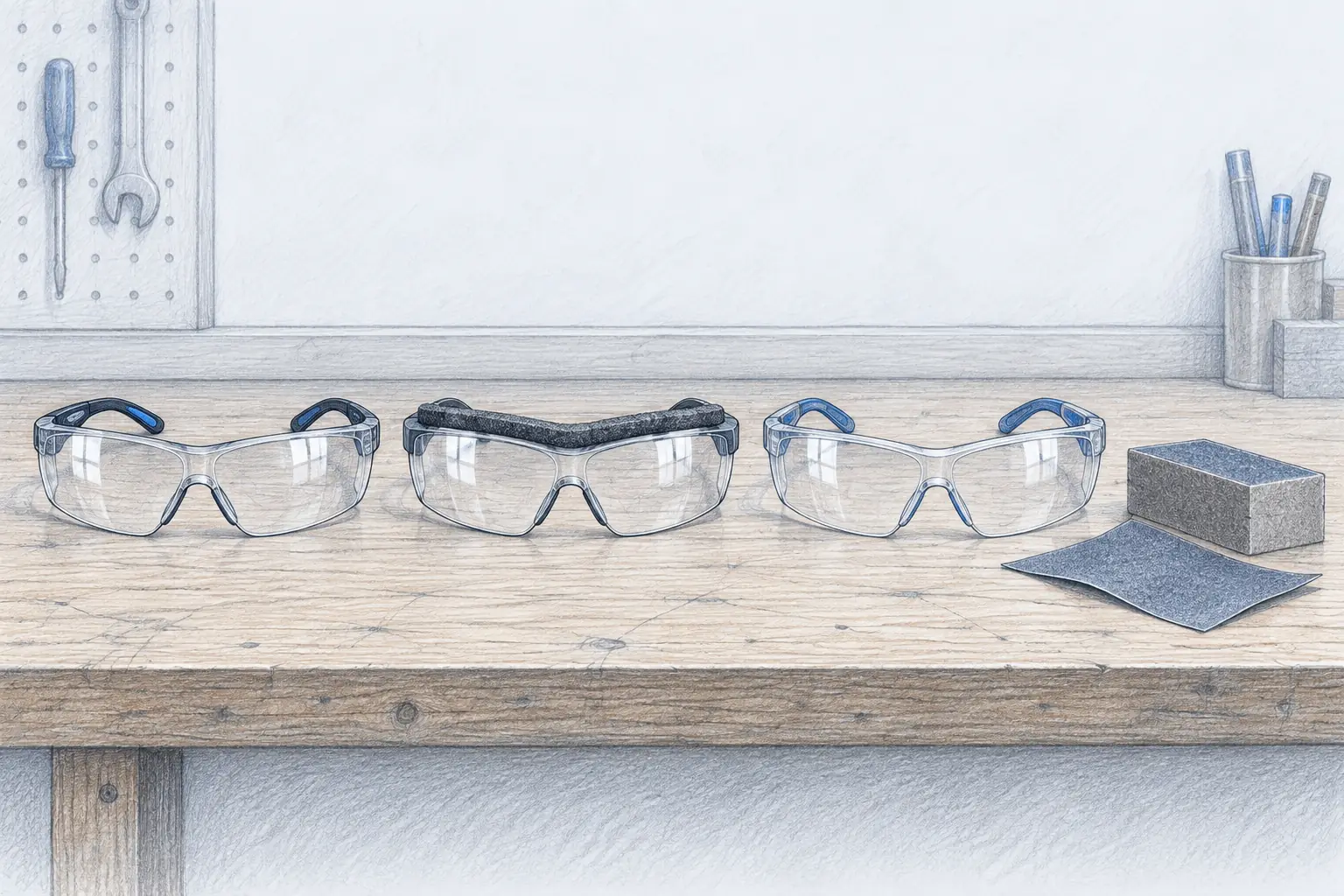
Best Safety Glasses for Woodworking (2026): 3 Pairs That Stay Clear
Woodworking tools
The best safety glasses for woodworking are the NoCry adjustable wrap-arounds for all-day comfort, with the 3M Virtua CCS as the pair for dusty cuts and the NoCry OverSpecs for anyone wearing prescription frames.
Our picks
The best safety glasses for woodworking for most people are the NoCry Clear Safety Glasses, and the reason is fit. A pair you have to push up every few minutes ends up on your head instead of your face, which is how shop injuries start.
The 3M Virtua CCS wins when dust is the problem, and the NoCry OverSpecs solves it for anyone in prescription frames. Wear them at the sander from our random orbital sander guide and at the router from our router for woodworking guide, and see the rest on the woodworking tool guides page.
What to look for in woodworking safety glasses
Coverage is the first thing to check. A woodworking pair should wrap toward the temple so it blocks the side and the top of the eye, not just the front. A lens that stops at the brow leaves a gap that a table saw or a trim router will find.
Fit is right behind it. Adjustable arms and a movable nose bridge let you match the frame to your face, which is the difference between glasses you forget about and glasses you fight all afternoon. The frames should sit level and stay put when you bend over the bench.
Then look at the lens coating. Anti-fog matters because shop work is warm and your breath and sweat both end up near the lens. A coated polycarbonate lens stays clear, and the coating is also what resists scratching, so it lasts longer if you clean it properly.
Impact rating is the last box to tick. Every pair here meets ANSI Z87.1, which is the standard for impact protection in the shop. Anything sold as fashion eyewear without that rating is not eye protection, no matter how much it looks the part.
Top pick: NoCry clear safety glasses
The NoCry clear safety glasses are the best pair for woodworking because they fit like gear instead of like a handout pair. The bridge swings to match your nose, and the arms extend and angle at the joint, so you can dial in a real fit rather than hoping one size works.
The wraparound polycarbonate lens covers the front and the side of the eye and reaches a little lower than a basic pair. Owners rate them highly for fog resistance, and the lens is rated for impact, which is the part that actually matters at the saw.
Use them for everything from sanding to routing to a quick cut on the miter saw. Clean them with mild soap and water and store them in a case instead of on the bench, and the coating will keep doing its job.
Who it is for: The everyday shop pair for someone who wants one set of glasses that fits and stays clear.
Skip if: You sand a lot and want a dust seal around the eye, in which case add the 3M pair below for those jobs.
Shop: NoCry Clear Safety Glasses on Amazon
Best for dusty cuts: 3M Virtua CCS
The 3M Virtua CCS is the pair to reach for when dust is the problem. The removable foam gasket limits the fine particles that reach the eye during sanding and routing, and small vents in the gasket let air move so the lens does not fog up while it works.
The wraparound frame gives a wide view with side coverage, and the lens meets ANSI Z87.1 for impact. The Cord Control System is the sleeper feature: slots at the temple ends hold corded earplugs so they stay attached and untangled, which means hearing protection is where you left it.
One limit to plan for. The foam gasket is warm, so on a summer day it comes out and the glasses go bare, which is fine. Earplugs are sold separately, so grab a pair if you also want to protect your hearing.
Who it is for: Sanding, routing, and turning, where fine dust is the main threat to your eyes.
Skip if: You want one pair for everything and prefer a lighter frame, in which case the NoCry pair above is the fit.
Shop: 3M Safety Glasses Virtua CCS on Amazon
Best over prescription frames: NoCry OverSpecs
The NoCry OverSpecs is the best pair for woodworkers in prescription glasses. It is built wider and deeper than a standard pair so it slides over frames up to 5.7 inches wide, 1.37 inches tall at the sides, and 1.77 inches tall at the center, without pinching the frames into your face.
The wraparound lens carries integrated side shields, which is the part a regular pair over glasses misses. Soft rubber tips and telescoping arms take the pressure off behind the ears, and the lens is rated for impact and blocks UV rays, so it works inside the shop and out.
The one thing to check is your frame size. Very deep or extra wide frames can still contact the lens, and the oversize build is heavier than a plain pair. If your frames are close to the fit limit, try them on before a long session.
Who it is for: Anyone who wears prescription glasses and needs protection that actually fits over them.
Skip if: You do not wear glasses and want the lightest possible pair, where the top pick is the better call.
Shop: NoCry OverSpecs Safety Glasses on Amazon
How the three pairs compare
Pick by the job. A general shop pair is the NoCry clear glasses, and most people stop there. If sanding fills your week, add the 3M pair for the dust seal and keep the others for everything else. If you wear glasses, the OverSpecs is the pair to buy first, since nothing else fits.
Safety glasses habits that keep your eyes safe
Put them on before the tool starts. Chips fly at the beginning of a cut, not at the end, and reaching for glasses with one hand on a running saw is how people get hurt. Keep them on the bench, on the tool, or on your face, never in a drawer across the shop.
Keep the lens clean. Dust and oil give fog a place to form, so rinse the lens and dry it with a microfiber cloth between tasks. That also removes the grit that scratches the coating, which is what shortens the life of a good pair.
Match the pair to the task. A light pair handles a few cuts. Dusty work wants the foam gasket. Finishing and solvent work wants a sealed goggle. Rotating between two pairs is cheaper than replacing one pair that got scratched doing work it was not made for.
Check them before a session. Look for deep scratches in the strike zone, a cracked frame, or a stretched arm that no longer holds. A pair that has any of those is spent, and a fresh pair costs less than an eye.
Who should skip these
Skip the light wrap-arounds if you spend most of your shop time sanding or turning. Dust is the main hazard there, and a foam gasket pair does more for you than a lighter lens. Start with the 3M Virtua CCS for those jobs.
Skip the over-glasses pair if you do not wear prescription frames. They are wider, deeper, and heavier than they need to be for someone with clear vision, so the standard NoCry pair is a better fit and less weight.
Skip all three if you want a sealed goggle for finishing, grinding, or spraying. None of these is a goggle, and splash protection is a different job than chip and dust protection.
Bottom line: The best safety glasses for woodworking are the NoCry Clear Safety Glasses for an adjustable fit that stays clear, with the 3M Virtua CCS as the pair for dusty cuts and the NoCry OverSpecs for prescription frames. More shop guides live on the Workshoppicks blog and the woodworking tool guides page. If sanding is the job that worries you most, our random orbital sander guide covers the tool side.
Frequently Asked Questions
What are the best safety glasses for woodworking?
The best safety glasses for woodworking are the NoCry clear wrap-arounds for most woodworkers. The adjustable nose bridge and extendable arms let you set a real fit, the anti-fog coating holds up through a long sanding session, and the lens covers more of the eye than a basic frameless pair.
Do I need safety glasses for woodworking?
Yes. Saws throw chips, routers throw material at speed, and sanders and table saws throw fine dust that a normal pair of glasses does not seal out. One chip from a table saw or a trim router is enough to end a shop session and cost you a clinic visit, so eye protection stays on for every cut.
Are safety glasses with foam gaskets worth it?
Yes, if you sand, route, or turn wood. The foam gasket closes the gap over the cheek and beside the eye where fine dust gets in, which is the gap that matters during sanding. The tradeoff is heat. On a warm day the foam traps sweat, so pull the gasket out and run the glasses bare.
Can I wear safety glasses over my prescription glasses?
Yes, if you buy a pair made for it. Over-glasses safety glasses are wider and deeper than regular pairs so they slide over your frames instead of pressing them into your face. Check the fit window before you buy. The NoCry OverSpecs fit frames up to 5.7 inches wide.
What is the difference between safety glasses and safety goggles?
Safety glasses sit on the face and cover the front and sides of the eye, which handles chips, dust, and impact. Safety goggles seal against the face and also block splash and fine airborne dust. For woodworking, glasses handle most tasks, and goggles are worth it for heavy sanding or finishing.
How do I keep safety glasses from fogging?
Start with an anti-fog lens, then keep it clean with mild soap and water and a microfiber cloth. Dust and skin oil give fog a place to form, so a quick rinse between tasks helps. If a mask or respirator is pushing your breath up into the lens, adjust its nose clip to stop the leak.
How long do safety glasses last?
Replace clear safety glasses when the lens is visibly scratched or hazed, because the scratch is where fog starts and where vision gets harder to trust. With basic care, a quality pair lasts months to a couple of years of regular shop use. Treat a deep scratch in the strike zone as the end of the pair.
Should safety glasses be tight or loose?
They should stay put without pressure. A pair that slides down makes you push it up all session, and a pair that squeezes gives you a headache. Adjust the arms and the nose bridge until the lens sits level and does not move when you bend over the bench.