Best Air Compressor for Garage (2026): 3 Picks for Real Shop Air
Air compressors and nailers
The best air compressor for a garage for most home shops is the Klutch 20-gallon, a 2 HP oil-free vertical that keeps up with impact wrenches and spray guns. Choose the VEVOR 13-gallon if noise is the problem, or the ECOMAX 6-gallon if you mostly inflate tires and run nailers.
Our picks
The best air compressor for a garage for most home shops is the Klutch 20-Gallon. A garage compressor has two jobs: store enough air that the pump does not run on every trigger pull, and recover fast enough that you are not standing around waiting.
A 20-gallon tank with 4.2 SCFM at 90 PSI does both for impact wrenches, ratchets, blow guns, and light spraying. If your first projects are trim and tires rather than air tools, start with the compact pick below and read the rest of our air compressor and nailer guides when you outgrow it.
What size air compressor a garage actually needs
Tank size and airflow do different jobs, and mixing them up is how people end up with a compressor that disappoints. The tank is your buffer. CFM at 90 PSI is how fast the pump refills that buffer while a tool is running.
Match the numbers to your tools. Inflating tires, blowing out a filter, and running a brad nailer need very little: a 6-gallon pancake handles all of it. An impact wrench, a ratchet, or a die grinder pulls air hard, so a 20-gallon tank with 4.2 SCFM at 90 PSI is the point where the compressor stops being the bottleneck.
Pressure is the last number. A 125 PSI machine and a 175 PSI machine both run the same 90 PSI tools, but the higher-pressure tank stores more usable air for the same tank size. That is why the Klutch feels stronger than its gallon size suggests.
Two more specs matter over years. Duty cycle tells you how long the pump can run without overheating, and 75% is comfortable for a home shop. Noise tells you whether you can work next to it, and garage compressors range from a conversational 66 dB to a saw-like 80 dB.
Top pick: Klutch 20-Gallon, 2 HP
The Klutch 20-Gallon is the best air compressor for most garages because it fixes the main frustration with small compressors: waiting. The 2 HP motor and 4.2 SCFM at 90 PSI keep an impact wrench working for a full tire rotation, and the 175 PSI ceiling stores meaningfully more usable air than the 125 PSI machines in the same class.
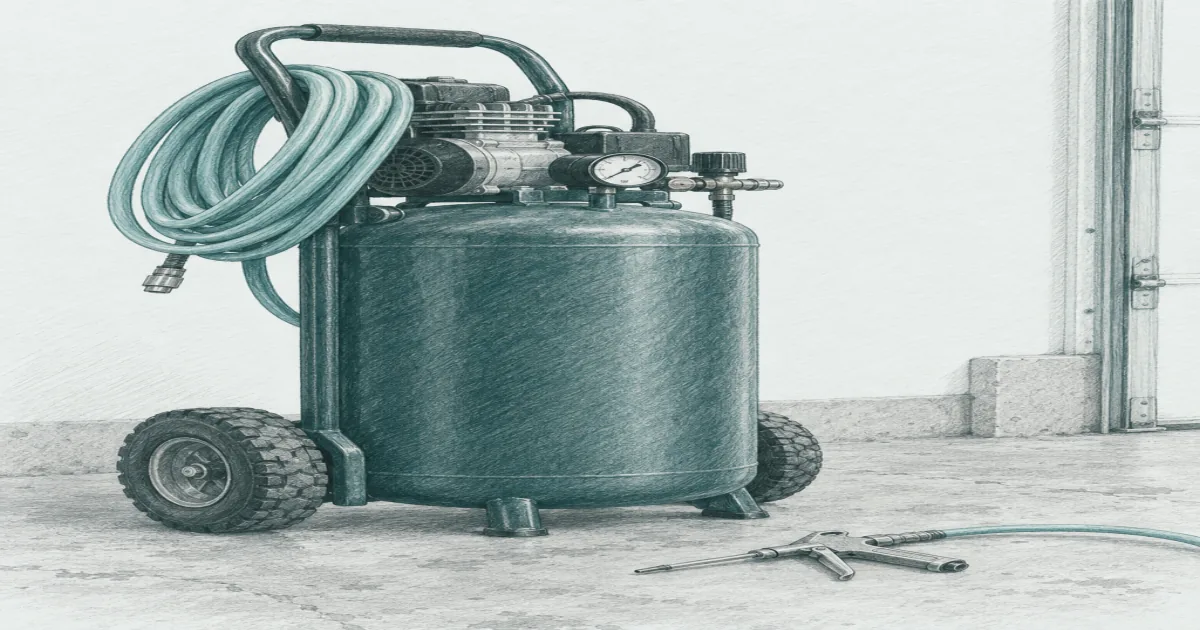
The 20-gallon vertical tank takes up roughly the footprint of a shop vac, which is the honest reason it fits a one-car garage. It rolls on large rubber wheels, and rubber foot stabilizers cut the vibration that makes a cheap compressor walk across the floor.
Day to day, the small features carry it. The forward-facing drain valve is easy to reach, so you actually drain the tank and avoid the rust that kills compressors. Two quick-connect outlets let you leave a hose on one port and a blow gun on the other. The thermal overload protection is the kind of thing you never notice until a long spray session would have cooked a cheaper motor.
Who it is for: Home mechanics, woodworkers, and DIYers who want one compressor that runs impact tools, nailers, and a spray gun.
Skip if: You do most of your work at night or in a shared building and need the quietest machine available.
Shop: Klutch 20-Gallon on Amazon
Best quiet: VEVOR 13-Gallon, 66dB
The VEVOR 13-Gallon is the best pick when you want garage air without the noise complaint. It uses an oil-free pump rated at 66 dB, which is closer to a dishwasher than a power tool, and the 13-gallon tank gives it more staying power than a pancake without much more floor space.
The 2 HP motor moves 4.6 SCFM at 90 PSI and builds full pressure in under three minutes. That is enough for nailers, staplers, inflation, and light spray painting, and the two 7-inch rubber wheels roll over a garage floor seam without hanging up.
It arrives with two air filters, two pressure gauges, wheels, and foot pads, so setup is mostly assembly. Buyers report it as reliable and genuinely quiet, with the recurring gripes being shipping damage and a wheel kit that takes some patience.
Know the ceiling before you buy. The 125 PSI maximum and 13-gallon tank put it below the 175 PSI garage compressors for heavy air tools, and the manufacturer itself points spray-gun customers to a larger model. It is a quiet all-rounder, not a high-demand one.
Who it is for: Homeowners who want a garage compressor that does not drown out the house, and who mostly run nailers, inflation, and light spray work.
Skip if: You run a die grinder, a sandblaster, or a full spray schedule and need maximum pressure and recovery.
Shop: VEVOR 13-Gallon on Amazon
Best value: ECOMAX 6-Gallon pancake
The ECOMAX 6-Gallon is the best value for a first compressor or a second one for quick jobs. The 150 PSI pancake tank is light enough to carry, and the 10-piece accessory kit means you are working the day it arrives instead of shopping for adapters.
Two quick couplers let two people run tools at once, and the low-voltage start helps it kick over in a cold garage or on a long extension cord. The oil-free pump keeps maintenance to a drain-and-go routine, and the two gauges let you set tool pressure without guessing.
This pick has a live deal running, so it is a good time to buy if it is already on your list. Just be honest about the job: a 6-gallon pancake runs nailers, staplers, and inflators all day, and it will not keep up with a die grinder or a full spray job.
Who it is for: First-time buyers, trim carpenters, and anyone who wants garage air for tires and nailers without spending $300.
Skip if: You plan to grow into impact wrenches, grinders, or spray guns, which need a bigger tank and more CFM.
Shop: ECOMAX 6-Gallon on Amazon
How the three garage compressors compare
The pattern is simple. If you want to run air tools, buy the Klutch and accept the noise. If the noise is the problem, buy the VEVOR and accept the lower pressure. If you just want tires, trim, and cleanup, buy the ECOMAX and keep the $150 difference.
Who should skip these compressors
Skip all three if your real plan is media blasting, long spray sessions, or running a die grinder for hours. Those jobs need a 60-gallon or larger compressor on 240V, and a smaller unit will run nonstop and still lose pressure.
Skip the VEVOR if you need maximum pressure. Its 125 PSI ceiling is fine for nailers and inflation, but the 175 PSI Klutch stores more usable air and recovers faster on heavy tools.
Skip the ECOMAX if you plan to grow. A 6-gallon pancake is a great first compressor and a poor second one if your tool collection is getting bigger. Buy the 20-gallon now and skip a step.
Tank size, CFM, and PSI in plain terms
Read the tools before the compressor. A brad nailer sips air, an impact wrench gulps it, and a die grinder empties a small tank almost immediately. Once you know what you are running, the compressor choice gets easier.
Buy tank for storage and CFM for recovery. The tank decides how long you can work before the pump kicks on, and the CFM at 90 PSI decides how fast it catches back up. A high-CFM compressor on a small tank works, but it cycles constantly, which is loud and hard on the motor.
Match pressure to the tools, not the spec sheet. Nearly all air tools run at 90 PSI, so a 125 PSI machine and a 175 PSI machine set the same regulator give the tool the same feed. The higher-pressure tank just holds more usable air before the pump starts.
Then plan the drain routine. Water collects in the tank every time you use it, and rust is what ends a compressor's life early. An easy-to-reach drain valve is worth more than a slightly higher CFM rating over five years of ownership.
Bottom line: The best air compressor for a garage is the Klutch 20-Gallon, 2 HP for air tools and spray work, the VEVOR 13-Gallon if you need quiet operation, or the ECOMAX 6-Gallon for tires and nailers on a budget. More shop guides live on the Workshoppicks blog and the air compressor and nailer guides page. If you are setting up the bench that goes with it, read our workbench guide.
Frequently Asked Questions
What size air compressor do I need for a garage?
A 20-gallon, 2 HP compressor is the sweet spot for a home garage. It delivers enough air to run an impact wrench, a ratchet, a blow gun, and most spray guns without the pump running nonstop. Step down to a 6-gallon pancake only if your work is tires, nailers, and cleanup.
Is a 20-gallon air compressor big enough for a home garage?
Yes, for almost everything a home garage does. A 20-gallon tank at 4.2 SCFM and 90 PSI will run impact tools, die grinders in short bursts, and touch-up painting. It will not keep up with a sandblaster or a full production spray schedule, which is where a 60-gallon unit earns its space.
What is the best air compressor for a home garage?
The best air compressor for a home garage for most people is the Klutch 20-gallon. It balances tank size, pressure, and price better than anything smaller, and its forward drain valve and big wheels make it livable. Pick the VEVOR 13-gallon instead if quiet operation matters more than maximum pressure.
What is a good compact air compressor for a garage?
The ECOMAX 6-gallon pancake is the best compact pick. It weighs about 30 lb, runs on a standard 120V outlet, and comes with a hose, chuck, and blow gun so you can inflate tires or run a brad nailer the same day. It is a light-duty compressor, not a shop compressor.
What is the best 20-gallon air compressor for a home garage?
The Klutch 20-gallon is the strongest 20-gallon value for a home garage. It runs 175 PSI, delivers 4.2 SCFM at 90 PSI, and has a 75% duty cycle, so it recovers quickly between tools. The tradeoff is noise, so put it away from your work area.
Do I need an oil-free or oil-lubricated air compressor?
Oil-free is the right call for most home garages. You skip oil changes and the compressor is safe to store on its side or in a cold corner. Oil-lubricated pumps last longer and run quieter, but they need regular oil changes, which is why oil-free wins for occasional weekend use.
Can a 6-gallon air compressor run an impact wrench?
It can run one for short bursts, then it has to catch up. A 6-gallon pancake works for a few lug nuts or a quick tire rotation, but a 20-gallon tank holds enough air to work steadily. If you plan to use an impact wrench often, buy the larger tank first.
How loud is a garage air compressor?
Most oil-free garage compressors run between 66 and 80 dB. The VEVOR 13-gallon is rated at 66 dB, which is quiet enough to talk over, while the Klutch 20-gallon sits around 80 dB. If noise is the deciding factor, buy the quiet one and keep a set of ear muffs nearby anyway.