Best Table Saw for Beginners (2026): 2 Saws Worth Starting On
Saws
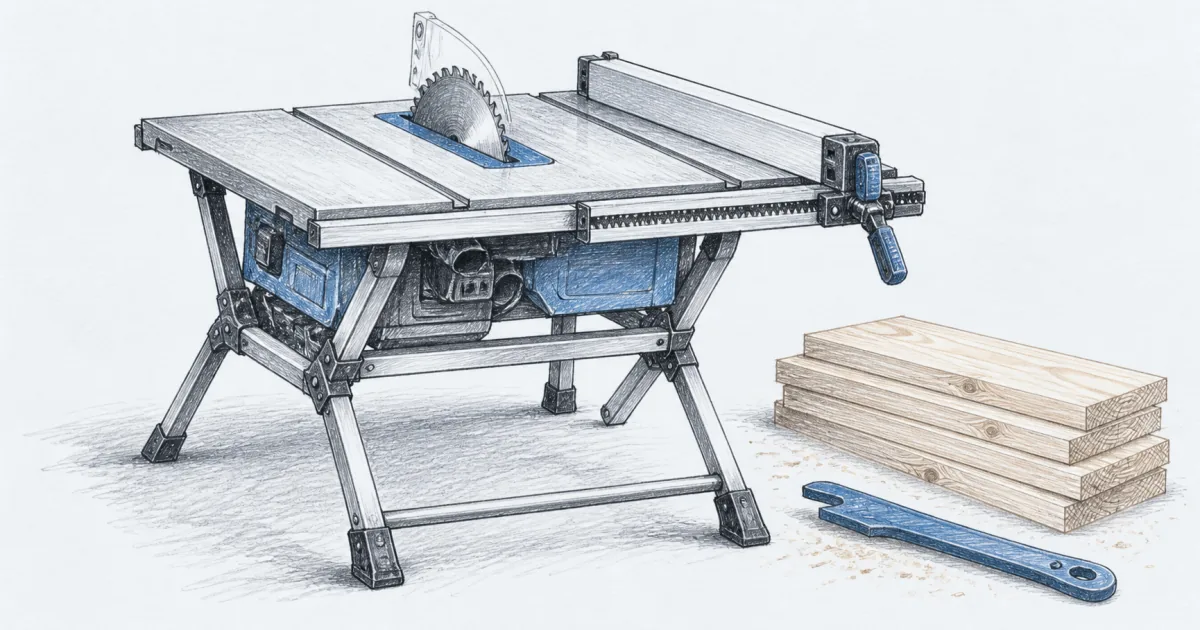
The best table saw for beginners is the SKIL TS6307-00, a 10-inch saw with a rack-and-pinion fence and a folding stand that stores against a garage wall. Choose the DEWALT DWE7485 if your space is tight and you want a smaller saw that still locks square.
Our picks
The best table saw for beginners is the SKIL TS6307-00 because it fixes the two things that make cheap saws frustrating: a fence that stays parallel and a blade big enough to keep cutting after you add a crosscut sled. It is the saw we would hand a friend who is buying their first one. Our saw guides cover where it fits next to miter and circular saws.
What a beginner table saw actually needs
A table saw makes one job easy: moving wood past a spinning blade in a straight line. Everything else on the machine exists to make that line repeatable. For a first saw, three parts decide whether that happens.
The fence comes first. A fence that locks parallel to the blade lets you rip a board, set it aside, and trust the next cut to match. A friction-lock fence drifts, and drifted cuts burn and come out out of square.
Blade size comes second. A 10-inch blade leaves roughly 3-1/4 inches of cut at 90 degrees. Add a 3/4-inch crosscut sled and you still have useful depth. An 8-1/4-inch blade leaves less, which is fine for trim but limiting for thicker stock.
Dust collection and the stand come last. A dust port that aims chips into a bucket keeps the garage livable, and a folding stand lets the saw disappear between projects. Both are conveniences, not dealbreakers.
Top pick: SKIL TS6307-00
The SKIL TS6307-00 is the best table saw for beginners because it puts money into the fence, which is the part you feel on every cut. The 15-amp motor and 10-inch blade handle framing lumber, plywood, and hardwood up to 4x4 at 90 degrees.
The rack-and-pinion fence is the headline. Instead of sliding a fence and tapping it square, you turn a dial and the front and rear of the fence move together on a toothed track. That single feature removes most of the frustration of a cheap saw.
The integrated folding stand makes it a garage tool rather than a permanent bench. It sets up fast, the legs lock, and it folds flat when the project is done. The 2-47 degree bevel covers the angle cuts most beginners need, and the dust port elbow shoots most of the mess into a bucket.
Two honest tradeoffs. The stock miter gauge is loose in the slot, so crosscuts want a better gauge or a shop-made sled. And the factory blade is a rough-cut blade, so budget for a 40-tooth general-purpose blade early.
Who it is for: First-time table saw buyers, garage woodworkers, and anyone who needs a saw that stores against a wall.
Skip if: You need to rip full sheets all day, or you want a saw that takes a dado stack without extra passes.
Shop: SKIL TS6307-00 on Amazon
Best compact: DEWALT DWE7485
The DEWALT DWE7485 is the best compact pick when space is the constraint. The 8-1/4-inch blade and 24.5-inch rip capacity make it small enough for a one-car garage, and the metal roll cage base means it survives being moved.
The fence is the reason to choose it over cheaper compact saws. The rack-and-pinion telescoping rails adjust fast, lock square, and repeat. Owners who have run both this and a budget saw point to the fence as the difference.
Dust collection is better than most portable saws. There is a cabinet port and a blade-guard port, and with both connected to a shop vac the capture is good for a jobsite design. The Site-Pro guard adjusts without tools, which makes removing it for a non-through cut less annoying.
Know the limits before you buy. There is no stand in the box, so you supply a bench or a stand. The 8-1/4-inch blade limits cut depth, and the short arbor will not accept a dado stack, so grooves and rabbets take multiple passes.
Who it is for: Small-shop woodworkers, trim carpenters, and anyone who values portability and a fence that stays true.
Skip if: You cut thick hardwood often, or you want dado capability and maximum depth in one saw.
Shop: DEWALT DWE7485 on Amazon
How the two saws compare
The short version: if you have the floor space, the SKIL gives you more blade and a stand for less money. If you do not, the DEWALT is smaller and tougher and still locks square.
Who should skip a jobsite table saw
Skip both saws if you need to cut full sheets of plywood every weekend. A jobsite saw has a small table, so a 4x8 sheet wants outfeed support and roller stands. A track saw or a circular saw with a straightedge breaks down sheets faster and safer.
Skip the compact DEWALT if you plan to cut dadoes. Without a dado stack, every groove is a series of overlapping passes. If joinery is the point of the saw, buy a 10-inch model that takes a dado set.
Skip the SKIL if noise is a problem in your garage. It is a loud saw, and a shared wall or a late-evening project will get noticed. The DEWALT is the quieter of the two, though neither is quiet.
Blade, fence, and safety setup for a first saw
Set the blade square before the first cut. Raise the blade, lay a machinist square against it, and check against the miter slot. Then dial the fence parallel and test with a scrap rip. Ten minutes of setup saves a pile of burned boards.
Buy one good blade and keep the stock blade for framing. A 40-tooth general-purpose blade covers most beginner work. Switch to a ripping blade for thick hardwood and an 80-tooth blade for plywood and trim.
Use push sticks and a riving knife from day one. The riving knife keeps the kerf from closing on the blade, and push sticks keep your hands clear. Make or buy a crosscut sled for square crosscuts instead of fighting the stock miter gauge.
Plan your infeed and outfeed space. You need roughly 8 feet on both sides of the blade for a full sheet, and less for cut boards. Roller stands or a simple outfeed table turn a small garage saw into a much safer tool.
Bottom line: The best table saw for beginners is the SKIL TS6307-00 for its 10-inch blade, geared fence, and folding stand, or the DEWALT DWE7485 if you need the smallest saw that still locks square. More shop guides live on the Workshoppicks blog and the saw guides page. If you are setting up the bench the saw sits on, our workbench guide covers that next.
Frequently Asked Questions
What is the best saw for cutting wood for beginners?
A 10-inch jobsite table saw is the best first saw for cutting wood. The SKIL TS6307-00 is the pick here because the blade is big enough to stay useful after you build a crosscut sled, and the rack-and-pinion fence locks parallel. If you only cut trim and small parts, the smaller DEWALT DWE7485 works too.
What is the best table saw for value for money?
The SKIL TS6307-00 is the best value for a first table saw. It costs less than the compact DEWALT and still gives you a 10-inch blade, a geared fence, and a folding stand. That combination is what usually costs several hundred dollars more on a premium jobsite saw.
Should I get a 10 inch or 8 inch table saw?
Get a 10-inch saw if you can. The extra blade size keeps more depth of cut once you add a crosscut sled or a dado set, and 10-inch blades are easier to find. An 8-1/4-inch saw like the DEWALT DWE7485 is lighter and smaller, which matters in a one-car garage.
Are Harbor Freight table saws any good?
Harbor Freight table saws are fine for rough framing and light hobby cuts, and the price is low. The fence is usually the weak point, because a friction-lock fence can drift out of parallel and burn a cut. If you want repeatable rips, spend a little more for a geared fence.
Do I need a table saw or a circular saw first?
Start with a circular saw if you only break down sheet goods. Add a table saw when you need repeatable rips, dadoes, and square crosscuts. Most home shops end up with both, but the table saw is the one that makes furniture work possible.
Is a jobsite table saw accurate enough for furniture?
Yes, once it is set up. Square the blade to the miter slot, dial the fence parallel, and use a good blade. A jobsite saw will not match a cabinet saw for vibration and table size, but it holds a tune well enough for shelves, benches, and small cabinets.
What blade should a beginner put on a table saw?
A 40-tooth general-purpose blade covers most beginner work. It crosscuts and rips softwood and plywood cleanly. Add a 24-tooth ripping blade for thick hardwood and an 80-tooth blade for trim and plywood tear-out. The factory blade is usually fine only for framing.
How much space does a table saw need in a garage?
Plan for at least 8 feet of infeed and outfeed room around the blade, plus walk space on both sides. A folding stand lets you reclaim the floor between projects. In a tight garage, park the saw against a wall and pull it out only for cuts.