Best Dust Collection System for a Small Shop (2026): Two Picks
Workbenches and storage
The best dust collection system for a small shop is the WEN DC3401 rolling collector for machines with a 4-inch port, paired with the Dustopper PRO separator to keep a shop vac filter clean on cleanup and hand tools.
Our picks
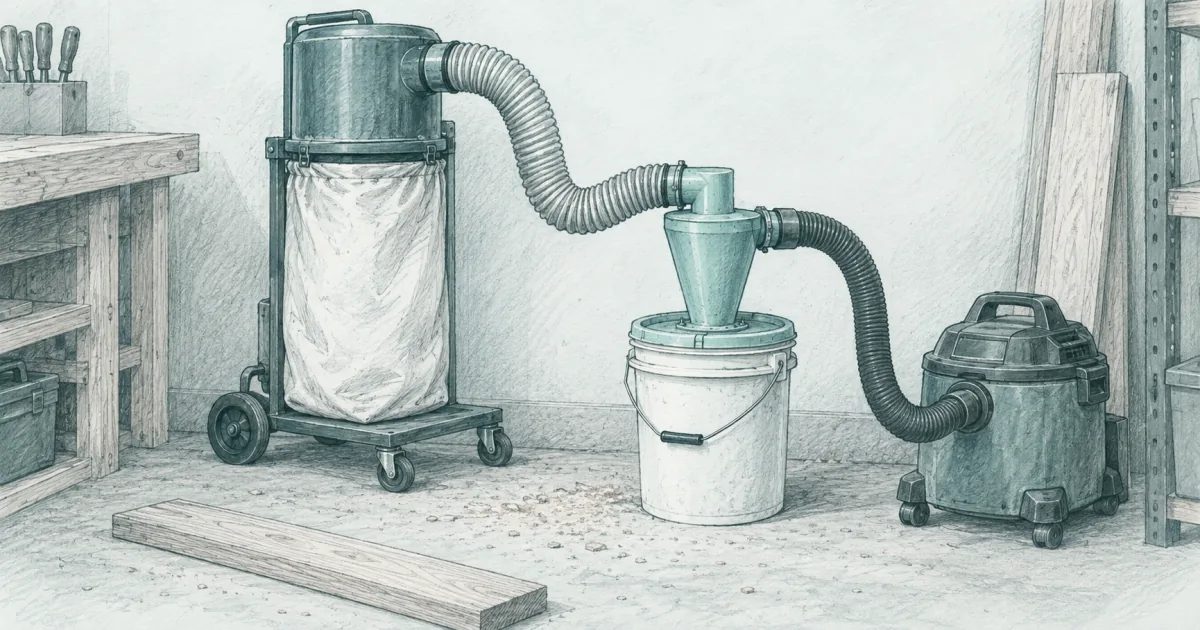
The best dust collection system for a small shop is two pieces, not one. A WEN DC3401 collector pulls chips off a planer and a table saw at close range, and a Dustopper PRO separator keeps the fine dust out of your shop vac. Together they cover the machines and the cleanup. If the shop is still coming together, start with our workbench guide and the rest of our workbench and storage guides.
What a small shop actually needs for dust
Dust comes in two sizes, and they need two different tools. Chips and shavings come off the planer and the table saw in volume, and they need a collector that moves a lot of air. Fine dust that floats and settles on every surface needs a filter or a vacuum that traps small particles.
That is why a shop vac alone is not a dust system. A vac has strong suction but low airflow, so it clears a router or a sander well and struggles to keep up with a planer. A collector has high airflow but low suction, so it pulls chips down a 4-inch hose and does not care about a small port.
The practical answer for a small shop is one of each. Run a collector on the machines that make chips, and run a shop vac with a separator on hand tools and floor cleanup. Keep the hose runs short so the airflow reaches the tool.
Top pick: WEN DC3401 dust collector
The WEN DC3401 is the best collector for a small shop because it moves real airflow without eating floor space. The 5.7-amp motor drives a 6-inch impeller that pushes 660 CFM through a 4-inch port, which is enough to pull chips off a planer, a table saw, or a band saw when the hose is short.
The size is the point. It measures about 34 by 13 by 14 inches and weighs about 17 pounds, so it rolls between machines on locking casters and stores under a bench between projects. Take the wheels off and it hangs on the wall, which frees floor space in a one-car garage.
The 12-gallon bag holds a lot of chips before you empty it, and the onboard handle makes it easy to carry. The 4-inch port takes standard hose, and the collection bag is a 5-micron bag that catches the bulk of the dust.
Know the one quirk. There is a metal safety screen across the intake that stops small offcuts from hitting the impeller, and it clogs quickly when you feed chips and cutoffs through. Check it between boards. The brushed motor also needs carbon brushes over time, which is normal for this price.
Who it is for: Small shops that run a planer, table saw, or band saw and want a compact collector that rolls or wall-mounts.
Skip if: You run wide machines in a big shop, or you need one unit to serve several tools at once.
Shop: WEN DC3401 on Amazon
Best with a shop vac: Dustopper PRO
The Dustopper PRO is the best dust separator for a shop vac because it turns a bucket into a pre-filter. It latches onto a standard five-gallon pail, and the cyclonic chamber drops the chips and most of the dust into the bucket before the air reaches the vacuum.
That keeps suction strong and saves money. When dust fills the vac filter, airflow drops and the vacuum stops pulling. Catching it in a bucket means you empty a pail instead of buying filters and bags. The lid also comes with two high-flow sweep elbows, which smooth the airflow into and out of the separator.
The low profile is the feature that fits a small shop. It needs less headroom than a tall cyclone lid, so it slides under a machine table or inside a miter saw cabinet. Setup takes about a minute, with a gasket that seals against the bucket and no drilling.
One thing to plan for. The finest airborne dust still gets past the separator and into the vac, so add a collection bag or a HEPA filter for the small particles. The lid also wants a shop vac rated 5.0 HP or higher to seal and pull well.
Who it is for: Anyone whose shop vac filter clogs fast, and small shops that want a cheap dust upgrade for hand tools and cleanup.
Skip if: You expect an air filter for fine dust, or your shop vac is a small low-power unit.
Shop: Dustopper PRO on Amazon
How the two setups compare
They are not competitors. The WEN collector handles the machines that make chips, and the Dustopper PRO protects the shop vac you already own. Buy the collector first if you run a planer or a table saw. Buy the separator first if a shop vac is all you have and the filter keeps clogging.
Sizing dust collection for one or two machines
Match the tool to the port. A machine with a 4-inch port, such as a planer, a table saw, or a jointer, needs a collector. A hand tool with a 1-1/4-inch port, such as a router or a sander, works with a shop vac and a separator.
Keep the hose short. A 660 CFM collector loses airflow fast through a long, flexible hose, so park it next to the machine you are running and move it when you switch tools. A 10-foot hose pulls better than a 20-foot one.
Run one machine at a time. Splitting a small collector across two open ports drops the airflow at each tool below what it needs. If you want to serve two machines from one hose, add a blast gate and open only the one you are using.
Add air filtration for what escapes. A collector and a separator catch most of the dust at the tool, but fine particles still float. A ceiling air filter or an open window with a box fan and a filter helps clear the room after a session.
Who should skip these
Skip both if your shop runs wide machines all day. A 660 CFM collector is sized for one machine at a time and short hoses, not a ducted network across a large shop. A bigger collector with an induction motor is the better tool there.
Skip the collector if you only cut with hand tools. A shop vac and a Dustopper PRO cover sanders, routers, and cleanup at a fraction of the cost and floor space. Add a collector when you buy a planer or a table saw.
Skip the separator if your shop vac is a small low-power unit. The Dustopper PRO wants a vac rated 5.0 HP or higher to seal and pull hard through the cyclone. A weak vac with a separator pulls less air than the vac did on its own.
Bottom line: The best dust collection for a small shop is the WEN DC3401 for machines with a 4-inch port and the Dustopper PRO for the shop vac. More shop guides live on the Workshoppicks blog and the workbench and storage guides page. If chips are coming off a planer, read our benchtop planer guide.
Frequently Asked Questions
What is the best dust extractor for a small workshop?
The best setup for a small workshop is a rolling collector with a 4-inch port for your machines, plus a bucket separator for your shop vac. The WEN DC3401 handles the planer and table saw, and the Dustopper PRO keeps the vac filter clean.
What is the best shop vac for dust collection?
A shop vac works best when you add a cyclone separator ahead of it. The Dustopper PRO catches most of the dust in a five-gallon bucket, so the filter stays clean and suction holds. Pick a vac rated 5.0 HP or higher so it still pulls hard through the separator.
How to keep dust down in a shop?
Capture dust at the tool first with a collector or a shop vac, then filter the air. A 4-inch collector on the planer, table saw, and jointer catches the chips. For the fine dust that escapes, add a ceiling air filter or crack a window and wear a respirator while you cut.
What is the best DIY dust collection system?
A DIY system works when you keep the runs short. Run a 4-inch hose from a rolling collector to one machine at a time instead of building a long duct network. Add a bucket separator to your shop vac for hand tools, and use blast gates if you split one hose between two tools.
Do I need a dust collector or a shop vac?
You need both for a complete small-shop setup, and they do different jobs. A dust collector moves high air volume for machines with a 4-inch port, such as a planer or table saw. A shop vac moves high suction for hand tools, cleanup, and small ports.
How many CFM do I need for a small shop?
Plan on 600 to 660 CFM at the tool for a small shop running one machine at a time. The WEN DC3401 moves 660 CFM through a 4-inch port. Long hose runs and small ports cut that number fast, so keep the hose short and the run direct.
Is a cyclone separator worth it for a small shop?
Yes, a cyclone separator is one of the best cheap additions in a small shop. It drops the chips and most of the dust into a bucket before they reach the vacuum filter. That keeps suction strong and saves money on filters and bags.
Can a dust collector run two machines at once?
A small collector should run one machine at a time. Splitting one 660 CFM unit across two open ports drops the airflow at each tool below what it needs to catch chips. Use a blast gate and open only the machine you are running.