Best Bar Clamps for Woodworking (2026): 2 Clamps That Hold a Glue-Up
Workbenches and storage
The best bar clamps for woodworking are the Jorgensen 24-inch steel bar clamp set for panel and frame glue-ups, with the IRWIN Quick-Grip mini clamps as the one-handed helpers for small assemblies.
Our picks
The best bar clamps for woodworking for most home shops are the Jorgensen 24-inch steel bar clamp set. A glue-up is only as good as the pressure holding it, and a pair of steel bar clamps spreads that pressure across a panel instead of pinching one spot. Pair them with the bench setup in our workbench for garage guide, then browse the rest on the workbench and storage guides page.
What to look for in bar clamps
A bar clamp is a simple tool, but the details decide whether it helps or fights you. The bar and the head do most of the work, and the handle and pads decide how the clamp feels in use.
Bar stiffness comes first. A steel bar that flexes under pressure bows in the middle, and a bowed clamp pulls a panel out of flat. A stiffer bar spreads force across the joint, which is what a glue-up needs.
Head travel comes second. A sliding clutch head sets fast along the bar and holds at any point, so you can position the clamp with one hand. A clamp with a slow screw the whole way is tiring on a big panel.
Then there is the jaw and the handle. Non-marring pads protect a finished face, and a comfortable handle lets you tighten by hand without slipping. Check that the pads stay on, because lost pads mean dents in your work.
Top pick: Jorgensen 24-inch steel bar clamp set
The Jorgensen 24-inch bar clamp set is the best bar clamp for a home shop because it gets the pressure and the setup right. The multiple disc clutch lets the sliding head move fast along the bar and lock at any point, so you set the clamp in one motion instead of cranking a screw the whole way.
The 600-pound load limit is more than most glue-ups need. A panel joint needs even pressure more than maximum force, and the steel bar spreads that pressure without bowing. Owners rate the set about four and a half stars and call it more than enough for most work.
The details are right too. The zinc-plated bar resists rust, the wooden handles are easy on the hand, and the swivel jaw sits flat on angled work. The 24-inch size covers drawer boxes, frames, and small panels, and it is the length most shops use most.
Plan around one small thing. The protective pads on the jaws can come off over time, so keep an eye on them. The clamps are also heavier than one-handed clamps, which makes them a bench tool rather than a quick overhead hold.
Who it is for: Home woodworkers gluing up panels, frames, drawers, and small tabletops who want a pair of clamps that will last.
Skip if: You only need a third hand for assembly, in which case a one-handed clamp is the better fit.
Shop: Jorgensen 24-inch bar clamp set on Amazon
Best one-handed: IRWIN Quick-Grip mini clamp 4-pack
The IRWIN Quick-Grip mini clamp 4-pack is the best small clamp for woodworking because it is the third hand you are missing. The six-inch clamps set with one hand, hold a part in place, and release with a trigger, which makes assembly and jig work far easier.
The non-marring pads are the detail that keeps them useful on finished work. They grip without leaving a mark, so you can clamp a face frame or a drawer front without a scrap block. The resin body is light, and four clamps in the pack cover most small assemblies at once.
Use them for what they are. These are light-duty clamps with about 150 pounds of force, so they hold parts and light glue-ups rather than pulling a thick panel together. Keep the jaw screws snug, because a loose screw lets the end slip under pressure.
Who it is for: Assemblies, jigs, and small glue-ups where you need a fast one-handed hold.
Skip if: You need to pull a wide or twisted joint tight, which is a job for the bar clamps above.
Shop: IRWIN Quick-Grip mini clamp 4-pack on Amazon
How the two clamps compare
The two picks do different jobs, which is why a shop ends up with both. The Jorgensen bar clamps do the heavy pulling on flat glue-ups. The IRWIN minis hold parts in place while you work. If you start gluing up wide tabletops, add a pair of parallel clamps such as the Jorgensen 50-inch set, which keeps its jaws parallel across a long joint.
Which clamp for which glue-up
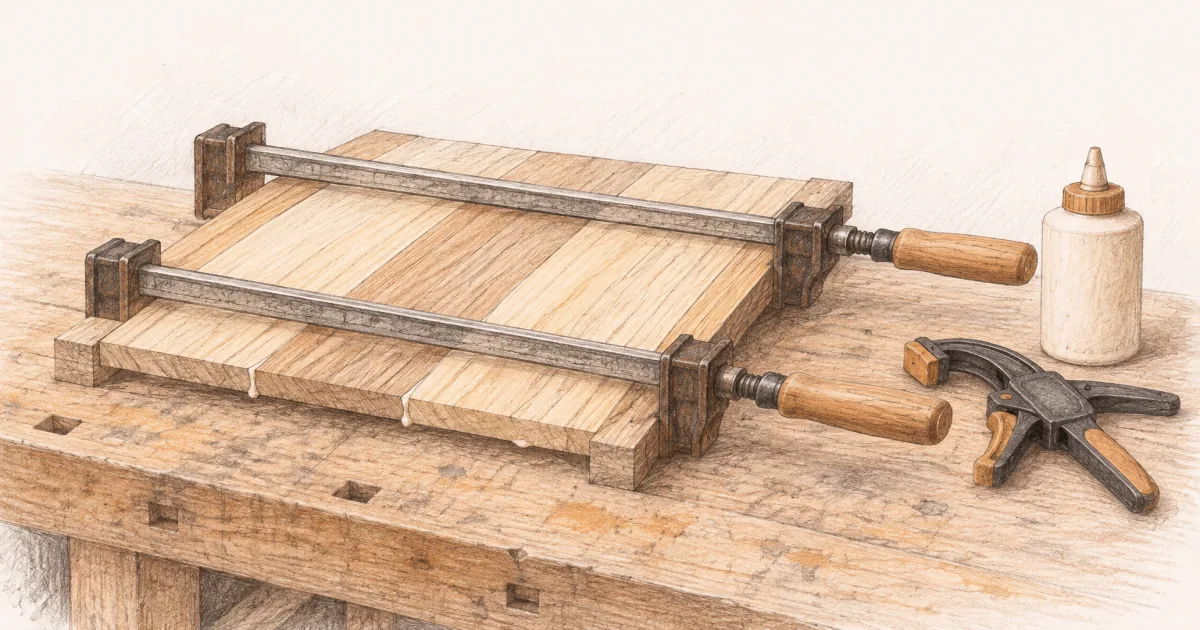
For a panel glue-up, use bar clamps across the joint plus a couple of clamps underneath to keep the panel flat. Space them every 6 to 8 inches, and put the clamps alternately over and under the panel so it cannot bow. Even pressure matters more than maximum force.
For a frame or a box, use bar clamps across the corners and check the diagonals before the glue sets. A band clamp wraps an irregular shape and pulls every joint inward at once, which is handy for picture frames and chair backs.
For assembly and jigs, use the one-handed clamps. They hold a shelf to a side panel, keep a straight edge in place, or clamp a stop block to a crosscut sled. Keep two clipped to the bench so they are always within reach.
For a repair, match the clamp to the reach. A six-inch clamp holds a drawer box, a 24-inch clamp closes a chair rail, and a long clamp reaches across a tabletop. A clamp that is too long flexes, so use the shortest one that reaches.
Clamping habits that save a glue-up
Dry-fit the joint before glue goes on. Clamp the parts together once with no glue, check the alignment and the diagonals, and note how many clamps you need. A dry run finds the problems while the fix is still easy.
Spread the clamps before you glue. Set the jaws near the closed size so you can place each clamp with one hand once the joint is wet. Glue has a short open time, and fumbling with a clamp wastes it.
Snug, then stop. You want enough pressure to close the joint and hold it, not so much that you starve it of glue. Watch for squeeze-out along the whole joint, which tells you the pressure is even.
Check for flat and square. Lay a straight edge across a panel or check the diagonals on a frame while the clamps are on. Once the glue sets, a twist or a bow is permanent, and no amount of sanding fixes it.
Who should skip these clamps
Skip the bar clamps if you only assemble flat-pack furniture and tighten the occasional loose leg. A single one-handed clamp covers that work, and a pair of 24-inch clamps is more than you need.
Skip the mini clamps if you are gluing up panels. They cannot pull a wide joint tight, and reaching for them there leads to gaps. Keep them for holding and jigs, and use bar clamps for the pulling.
Skip both if your projects are all wide tabletops. A 24-inch clamp will not reach across a full panel, and parallel clamps hold a long joint flatter. Start with a pair of parallel clamps if big glue-ups are the plan.
Bottom line: The best bar clamps for woodworking are the Jorgensen 24-inch steel bar clamp set for panel and frame glue-ups, with the IRWIN Quick-Grip mini clamp 4-pack as the one-handed helpers for assembly and jigs. More shop guides live on the Workshoppicks blog and the workbench and storage guides page. If your next project is a bench to clamp on, start with our workbench for garage guide.
Frequently Asked Questions
Are bar clamps good for woodworking?
Yes, bar clamps are the workhorse clamp for woodworking glue-ups. Their steel bar resists flexing, so they spread pressure evenly across a panel or a frame, and the sliding head lets you set them fast. A pair of 24-inch bar clamps covers most small-shop work.
What is the best band clamp for woodworking?
A band clamp is the best choice for clamping an irregular shape such as a picture frame or a chair back, because the strap wraps the whole joint and pulls inward. Add one band clamp alongside bar clamps if you build frames. A bar clamp stays the better tool for flat panels.
Which clamp is better, Bessey or Jorgensen?
Both make good clamps, and owners argue both ways. Jorgensen clamps are known for value and strong parallel models, and Bessey is the common premium alternative. For a home shop, a Jorgensen set does the job at a lower price.
What are the common problems with bar clamps?
The common issues are jaw pads that fall off, a clutch that slips when dust or glue gets in it, and bars that flex when you over-tighten a long clamp. Keep the bar clean, check the pads, and use the shortest clamp that reaches the joint.
How many clamps do I need for a tabletop glue-up?
Plan on one clamp every 6 to 8 inches along the joint, plus a couple of spares. A four-board tabletop needs six to eight bar clamps. Clamps are the tool you never have enough of, so buy a pair at a time as projects grow.
What is the difference between a bar clamp and an F-clamp?
A bar clamp has a fixed jaw and a sliding head on a long steel bar, which spreads pressure for glue-ups. An F-clamp looks similar but has a thinner bar and a screw jaw for tighter spots. For panel work, a bar clamp is the better tool.
Do I need parallel clamps for glue-ups?
Parallel clamps are the best choice for panel and tabletop glue-ups because their jaws stay parallel and spread pressure across the full joint. Standard bar clamps work for smaller assemblies. Add parallel clamps when you start gluing up wide panels.