Best Pocket Hole Jig for Beginners (2026): 2 Jigs That Make It Simple
Woodworking tools
The best pocket hole jig for beginners is the Kreg 720PRO, a self-clamping jig that sets itself for board thickness so you can focus on drilling. The Massca Twin is the budget pick for a first project under $60.
Our picks
The best pocket hole jig for beginners is the Kreg 720PRO, because it removes the two settings that trip up new woodworkers: clamping the board and matching the jig to the board thickness. Drop the board in, squeeze the handle, and drill. Our woodworking tool guides cover the machines that surround it, and the router guide is the natural next tool once you start building.
What a beginner pocket hole jig needs
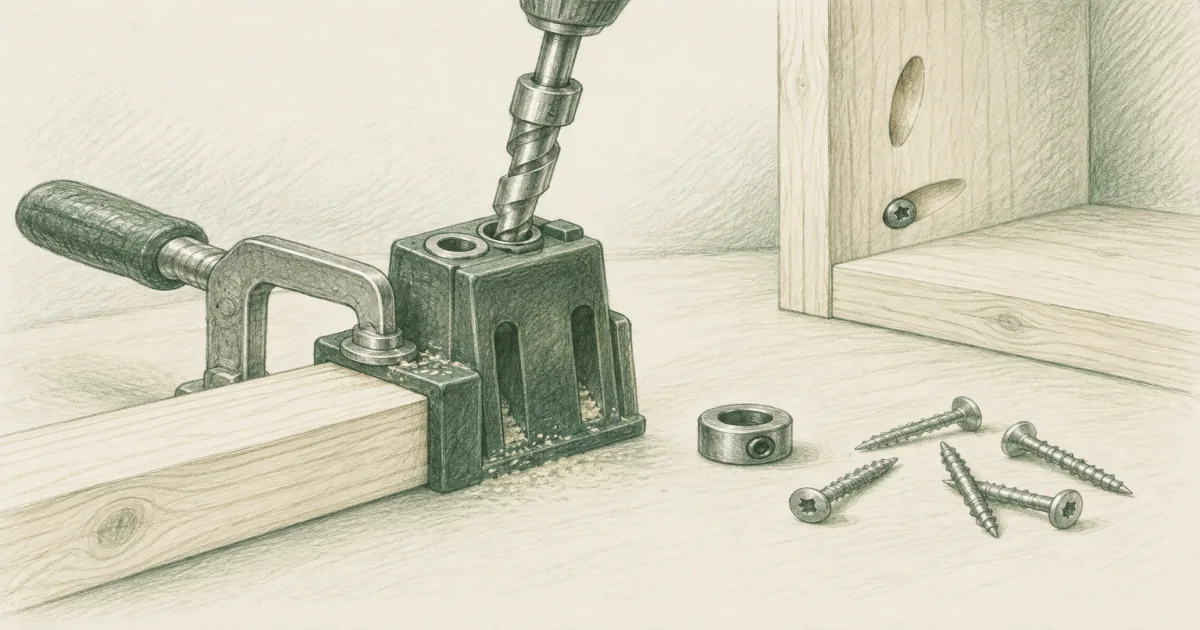
A pocket hole jig drills an angled pilot hole and a flat-bottomed pocket in one pass, so a screw pulls two boards tight from the inside. The joint is hidden, strong, and quick, which is why it is the first joinery most beginners learn. The jig's job is to hold the board at the right angle while the stepped bit does the rest.
For a beginner, two features matter most. A built-in clamp holds the board so you do not need a separate clamp for every hole. A thickness gauge or self-adjusting clamp sets the drill depth so the screw seats without blowing through the far side.
Speed matters less at first. A jig that drills one hole at a time is fine. What you want is a setup that repeats the same hole, in the same place, without you having to re-measure each time.
Top pick: Kreg Pocket-Hole Jig 720PRO
The Kreg 720PRO is the best pocket hole jig for beginners who will build more than one project, because it does the thinking for you. The Automaxx clamp auto-adjusts to stock from 1/2 inch to 1-1/2 inch, so switching between plywood and two-by lumber takes seconds. The self-squaring fence holds the board perpendicular to the drill guide, which is what keeps joints square when you are tired.
The docking station is the other reason to choose it. The wings support a long board so it does not cantilever off the bench and torque the guide, and they hide spare screws, bits, and the wrench. A dust port connects to a shop vac, which keeps the drill chips off your bench. The kit includes pocket screws and a jig clamp so you can start on day one.
It costs more than a simple jig, and that is the honest tradeoff. If you only need a handful of holes for one small project, a cheaper jig does the same job. If pocket holes will be your main joinery, the clamp and fence save real time on every hole.
Who it is for: Beginners and home woodworkers who plan to build cabinets, shop furniture, and repairs regularly, and want the least fuss per joint.
Skip if: You want the lowest price for a single project, or you prefer a small portable jig.
Shop: Kreg 720PRO on Amazon
Best budget: Massca Twin pocket hole jig
The Massca Twin Pocket Hole Jig is the best budget pick for a first project. It is an aluminum jig with hardened steel drill guides that take two holes in one setup, which is faster on wider joints. The body is mostly metal, so it feels more solid than the price suggests.
The magnetic quick-adjust base sets the jig without marking out the board. A built-in thickness gauge and a drill depth gauge remove most of the guesswork, and the kit includes the stepped bit, a stop collar, and a hex key. You can pull one side off and use it as a single-hole jig when a full twin guide is too much tool for the job.
The two things to know are the magnets and the instructions. The width setting can drift if you handle the jig between holes, so use a spacer for repeat work. The printed instructions skip a step or two, but the setup is easy to figure out. For a beginner on a budget, it is an honest way to learn pocket hole joinery.
Who it is for: Beginners and occasional builders who want real pocket hole joinery for under $60, and do not mind a little extra setup.
Skip if: You drill pocket holes every week and want the self-clamping speed of the Kreg.
Shop: Massca Twin pocket hole jig on Amazon
How the two jigs compare
The Kreg does more of the setup for you, which is what you pay for. The Massca gets you drilling the same joints for a lot less and leaves room to upgrade later.
How pocket hole joinery works
A pocket hole jig guides a stepped bit at an angle into one board, cutting a pilot hole and a wider pocket in one pass. The screw sits inside the pocket, passes through the first board, and bites into the second. Because the screw pulls from an angle, it clamps the joint tight without a glue-up and without a visible fastener on the outside.
The depth collar on the bit sets how deep the pocket goes and where the screw tip lands. Set it to the board thickness on the jig's gauge, and the screw seats without poking through the far side. Get it wrong and the point blows out of the face, which is the most common beginner mistake.
The joint is not the strongest in woodworking, but it is strong enough for cabinets, face frames, shop furniture, and repairs. Where glue and clamps would slow you down, pocket holes let you drill and drive and move on.
Setup, screws, and the mistakes that ruin pockets
Set the depth collar to your board thickness before the first hole. A collar set for 3/4-inch plywood will punch through 1/2-inch stock. Check it every time you change material.
Use the right screw. Coarse threads bite in softwoods like pine and plywood. Fine threads hold in hardwoods like oak and maple. Wrong threads strip or split the board, and the jig's gauge tells you the length.
Hold the board flat and tight against the jig face so the bit enters squarely, then drill until the collar bottoms out. Let the bit clear the chips and do not force it, or the guide heats up and the pocket walls wallow. Push the screw firmly and let the clutch stop it rather than over-driving and stripping the head.
Who should skip a pocket hole jig
Skip both if your work is fine furniture with visible joinery. Pocket holes are hidden joints, and if the joint will show, a different method looks better. Skip them if you mostly work with thin stock under 1/2 inch, because the jig range starts there.
Skip the Kreg if you will not build much. A cheaper jig that lives in a drawer is better than an expensive one that sits unused. Start with the Massca, learn the motion, and upgrade when pocket holes become part of how you build.
Bottom line: The best pocket hole jig for beginners is the Kreg 720PRO for its self-adjusting clamp and square fence, or the Massca Twin for budget pocket holes under $60. More build guides live on the Workshoppicks blog and the woodworking tool guides page.
Frequently Asked Questions
Which pocket hole jig is better, Kreg or a budget brand?
Kreg jigs win on refinement and support, and the Kreg clamp and self-squaring fence are the easiest to use. Budget twin jigs such as the Massca drill the same joints for much less, with a little more fuss in the setup. For a first project, either makes a strong joint.
Is a Kreg jig worth the money?
Yes, if you will use it more than a few times. Joint quality is about the same across the Kreg range, so the extra money buys speed and less fiddling, not stronger joints. The self-adjusting clamp pays off when you switch board thicknesses often.
Do you really need a pocket hole jig?
No, but it turns hidden joinery into a five-minute job. For cabinet boxes, face frames, and shop furniture, pocket holes are faster than dowels or biscuits and need no glue-up clamp time. If you build with screws already, a jig makes those joints cleaner and stronger.
How do I choose a pocket hole jig for a beginner?
Start with the setup you can learn fastest. A jig with a built-in clamp and a thickness gauge removes the two things beginners get wrong. If you plan one small project, a cheaper jig with a separate clamp is enough.
What thickness of wood can a pocket hole jig handle?
Most jigs cover 1/2-inch to 1-1/2-inch stock, which includes 3/4-inch plywood, one-by lumber, and two-by framing. That range covers almost all furniture and cabinet work. Thicker stock needs a jig with an extension or a separate base plate.
What screws do I use with a pocket hole jig?
Use self-tapping pocket hole screws sized to the board thickness, with coarse threads for softwoods like pine and fine threads for hardwoods. The jig's thickness gauge tells you the screw length. Matching the screw to the board stops the point from blowing out the other side.
Do I need a special drill bit for pocket holes?
Yes. Pocket holes use a stepped drill bit with a depth collar so the pilot hole and the pocket cut in one pass. Most jigs include the bit and collar. Replace the collar setting only when you change board thickness.