Best Wood Lathe for Beginners (2026): Three Benchtop Lathes
Woodworking tools
The best wood lathe for beginners is the WEN 3421, a compact mini lathe with a soft-start motor that turns pens, handles, and small bowls. Step up to the GarveeTech 14x40 or the WEN LA3424 when you want to turn larger pieces.
Our picks
The best wood lathe for beginners is the WEN 3421. It is small, affordable, and forgiving, with a soft-start motor that will not throw a blank at you while you learn. When you want to turn table legs and bigger bowls, the GarveeTech 14x40 gives you the most capacity for the money, and the WEN LA3424 sits in the middle. All three live in the woodworking guides, and if you are prepping boards before they go on the lathe, our jointer guide and the router guide cover the steps before.
What a beginner wood lathe actually needs
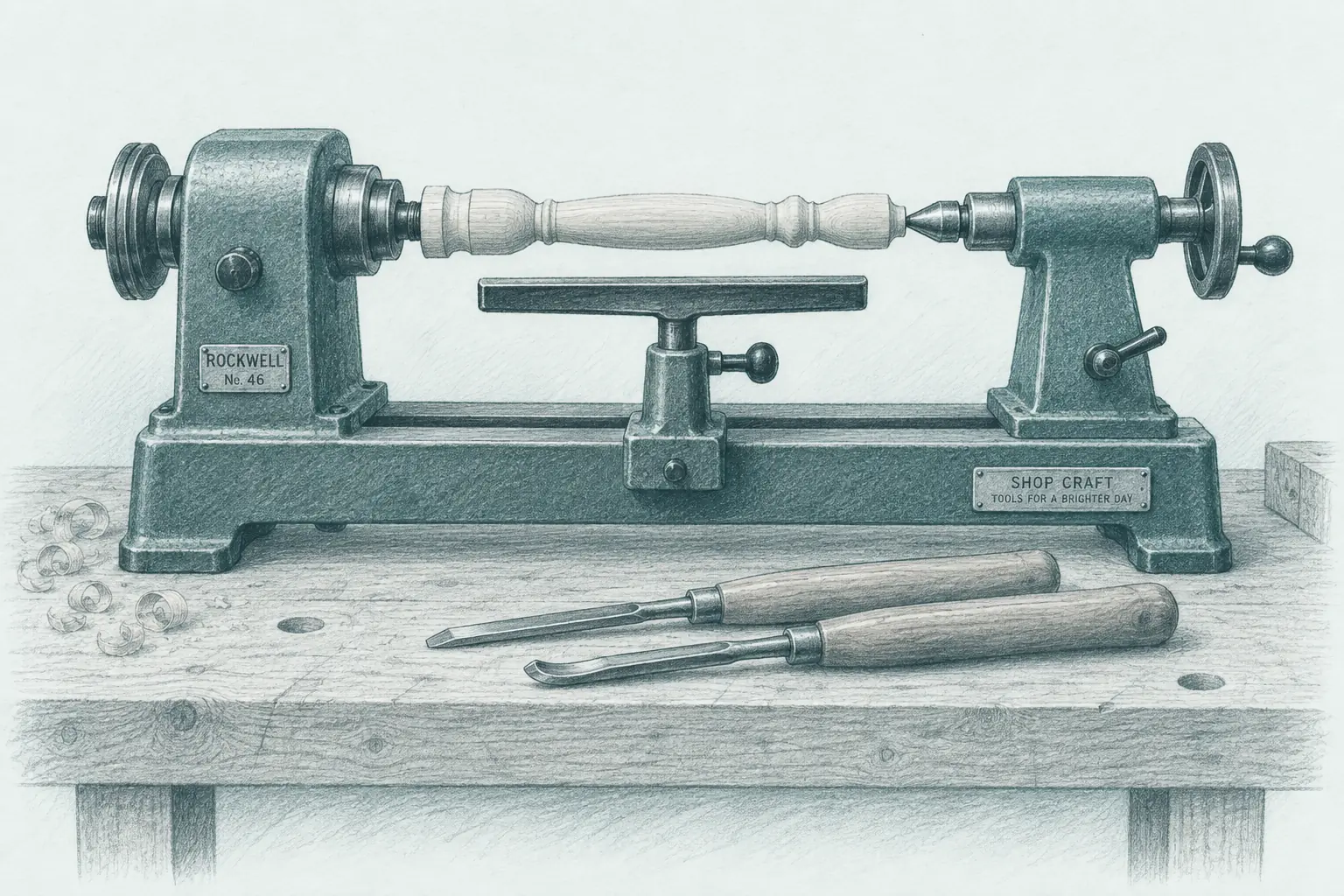
A wood lathe spins a block of wood while you shape it with a chisel. It is the tool for round work: pens, handles, bowls, and spindles. It is also one of the more approachable shop tools once the machine is stable and the tools are sharp.
Two numbers define what a lathe can do. Swing is the largest diameter you can turn, which is twice the distance from the spindle to the bed. Distance between centers is how long a spindle you can mount. A 14-by-40 lathe turns a 14-inch diameter and a 40-inch length; a mini lathe turns about 8 inches wide and 12 inches long.
Then come the controls. Variable speed lets you start slow on an unbalanced blank and speed up as it trues. A soft-start motor eases the machine up to speed instead of jerking the blank. Both matter more to a beginner than raw horsepower.
Finally, stability. A lathe that walks or vibrates leaves a rough cut and is unsafe. A solid bench, a bolted-down machine, and a balanced blank fix most of it.
Top pick: WEN 3421 mini lathe
The WEN 3421 is the best wood lathe for beginners because it gets the learning curve right. The 3.2-amp motor has over 50 percent more power than many 8-inch lathes, and it runs a soft-start variable speed from 750 to 3200 RPM.
The capacity suits first projects. The 8-inch swing and 12-inch distance between centers turn pens, bottle stoppers, handles, cups, and small bowls. The MT1 spindle and tailstock taper hold the workpiece, and the lathe includes a 2.3-inch faceplate, two interchangeable tool rests, a spur center, and a cup center.
The controls are simple. A lever clamping system adjusts the tool rest and tailstock, and the variable-speed knob covers slow roughing and fast finishing. The 2-year warranty and WEN's parts network back it up.
Plan to bolt it down. The lathe walks during heavy cuts until it is anchored, and a stable mount is what turns it from a rough machine into a smooth one. Add a four-jaw chuck when you start turning bowls, and it grows with you.
Who it is for: First-time turners who want pens, handles, and small bowls on a compact, affordable machine.
Skip if: You already know you want to turn table legs or large bowls.
Shop: WEN 3421 on Amazon
Best full-size value: GarveeTech 14x40
The GarveeTech 14x40 is the best full-size value for a beginner who wants to turn bigger work. The 400-watt, 3.5-amp motor runs on 120 volts, and the lathe offers four belt speeds at roughly 1,040, 1,480, 2,130, and 2,980 RPM.
Capacity is the draw. The 40-inch distance between centers turns table legs, long spindles, and furniture parts, while the 14-inch swing takes bowls that a mini lathe cannot. The movable tailstock adjusts for different workpiece lengths.
The construction is solid steel with a soft-start motor for low-noise startup. The four-speed belt setup lets you match the speed to the workpiece size: slower for a big, unbalanced bowl and faster for a small spindle.
Buy it knowing the tradeoffs. Speed changes are manual, so you stop and move the belt rather than turning a dial. The base flexes if you overtighten the tailstock. Treat those as habits to learn and the machine rewards you with real capacity for the price.
Who it is for: Beginners who want to turn table legs, larger bowls, and long spindles on a budget.
Skip if: You want a dial for speed changes, or you only turn pens and small parts.
Shop: GarveeTech 14x40 on Amazon
Best mid-size: WEN LA3424
The WEN LA3424 is the best mid-size lathe for a beginner who has outgrown a mini. The 4.5-amp motor runs five fixed speeds at about 520, 900, 1400, 2150, and 3400 RPM, and the lathe offers a 12-inch swing with an 18-inch distance between centers.
That capacity covers the projects a mini lathe cannot. A 12-inch swing turns bowls up to 12 inches, and 18 inches between centers handles medium spindles. The 3-1/8-inch faceplate expands what you can mount for non-spindle work.
The machine is built for stability. The heavier bed and headstock damp vibration better than a mini lathe, and the lever clamping system adjusts the tool rest and tailstock precisely. It is a machine you can keep as your skills grow.
Plan your speeds. The five speeds are set by moving the belt, so decide roughing versus finishing before you mount the workpiece. For a beginner moving up from a mini, that is a small price for the extra capacity.
Who it is for: Beginners who want bowls up to 12 inches and medium spindles without a full-size lathe.
Skip if: You want a dial for speed changes, or you only turn small pens.
Shop: WEN LA3424 on Amazon
How the three lathes compare
The choice comes down to size. The WEN 3421 is the best first lathe for pens and small work. The GarveeTech is the most capacity for the money. The WEN LA3424 is the mid-size machine for bowls and medium spindles.
Getting started turning safely
Bolt the lathe down. A lathe that can move will move, and vibration ruins the cut. Anchor it to a solid bench or a stand, and check the mount before each session.
Start slow and true the blank. Begin at the lowest speed on an unbalanced blank, round it off, then speed up. Soft-start motors help, but a steady hand and a low starting speed do more.
Wear the right protection. Use a face shield, not just glasses, and keep long sleeves and jewelry away from the spindle. A lathe throws chips and, if a blank catches, can throw more.
Sharp tools cut safe. A dull gouge catches and tears. Touch up your tools often with a slow-speed grinder and a jig, and let the bevel rub the wood while the edge cuts.
Learn the three basic cuts. The roughing gouge removes square stock to round, the spindle gouge shapes details, and the skew chisel smooths and squares. Practice each on scrap before you commit a good blank.
Who should skip these lathes
Skip all three if you only turn pens and you want the smallest possible machine. A dedicated pen lathe is smaller and cheaper, and it does the one job well.
Skip the mini lathe if you already plan to turn bowls or table legs. Start at the GarveeTech 14x40 or the WEN LA3424 so you do not outgrow the machine in a month.
Skip the full-size lathe if you work in a small apartment or shared space. The mini and mid-size lathes are quieter and easier to tuck away.
Bottom line: The best wood lathe for beginners is the WEN 3421 for pens and small spindles, the GarveeTech 14x40 for the most capacity for the money, or the WEN LA3424 for a mid-size machine. More shop guides live on the Workshoppicks blog and the woodworking guides page. If you are squaring boards before they go on the lathe, read our jointer guide.
Frequently Asked Questions
What is the best wood lathe for a beginner?
The best wood lathe for a beginner is the WEN 3421. It is a compact 8-by-12 mini lathe with a soft-start 3.2-amp motor that turns pens, handles, and small bowls, and it is the lathe most people hand to first-time turners. If you want to turn larger pieces, the GarveeTech 14-by-40 is the value pick.
What can I make on a beginner wood lathe?
A beginner lathe turns pens, bottle stoppers, handles, chess pieces, small bowls, and spindles. A mini lathe like the WEN 3421 handles pieces up to 8 inches wide and 12 inches long. A 14-by-40 lathe opens up table legs and larger bowls.
How much should I spend on a first wood lathe?
Plan on about $250 to $450 for a capable beginner lathe. A mini lathe runs on the low end and a mid-size machine on the high end. Leave money for a chuck, a sharpening setup, and a few good chisels, because the tooling matters as much as the lathe.
What is the difference between swing and distance between centers?
Swing is the largest diameter you can turn, measured as twice the distance from the spindle to the bed. Distance between centers is how long a spindle you can mount. A 14-by-40 lathe turns a 14-inch diameter and a 40-inch length.
Do I need a chuck to start turning?
Not for spindle work. A beginner can turn pens, handles, and spindles with the drive center and the faceplate that come in the box. A four-jaw chuck makes bowl turning much easier, so add one when you start turning bowls.
Why does my lathe vibrate or walk across the bench?
Vibration comes from a lathe that is not anchored and from turning a blank that is not balanced. Bolt the lathe to a solid bench or stand, start at a low speed, and true the blank round before you speed up. Soft-start motors help prevent a rough start.
What wood should a beginner turn?
Start with a soft, straight-grained hardwood like maple, cherry, or walnut. Avoid knots and highly figured wood until your cuts are steady. Green wood turns easily but moves as it dries, so begin with dry blanks for pens and handles.
Do I need to sharpen turning tools?
Yes, sharp tools cut cleanly and safely. A dull gouge catches and tears the wood. Start with a sharpening system or a slow-speed grinder and a jig, and touch up your tools often. Sharp tools make a bigger difference than a bigger lathe.